
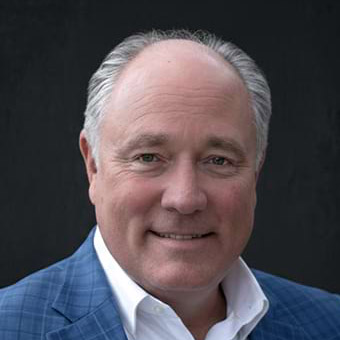
On January 30, 2026, President Donald Trump announced via Truth Social his nomination of Kevin Warsh to succeed Jerome Powell as Chairman of the Federal Reserve. The nomination marks a pivotal moment for American monetary policy. Warsh, a former Fed Governor who served during the 2008 financial crisis, represents both continuity with institutional norms and a break from the Powell era.
Yet Warsh steps into what may be the most challenging role in modern Fed history. He must navigate a president who demands rate cuts, markets that fear both inflation and recession, economists who question his ideological consistency, and a crypto community uncertain whether he represents friend or foe. This essay attempts to examine the man, the moment, and the monumental task ahead.
Part I: The Man Behind the Nomination
Background and Career
Kevin Warsh was born in 1970. He holds a bachelor’s degree in public policy from Stanford University and a law degree from Harvard Law School. Before government, Warsh worked in mergers and acquisitions at Morgan Stanley, developing market expertise that would inform his Fed tenure.
His entry into government came through the George W. Bush White House, where he served as a special assistant to the president for economic policy. This role positioned him at the nexus of political and economic decision-making.
Fed Governor (2006-2011)
Warsh’s appointment to the Federal Reserve Board in 2006 placed him at the center of the most severe financial crisis since the Great Depression. At 36, he was the youngest Fed Governor in history. During his tenure, Warsh was known for hawkish instincts—in April 2009, even as unemployment soared to 9 percent, he expressed concerns about inflationary risks. Bloomberg’s Chief U.S. Economist Ana Wong has said of those transcripts: “His quotes scared me.”
Yet defenders argue his caution reflected legitimate concerns about long-term consequences of unprecedented monetary intervention—concerns that proved somewhat prescient when inflation spiked to 9.1 percent in 2022.
The Hoover Institution Years
After leaving the Fed in 2011, Warsh became a distinguished visiting fellow at Stanford’s Hoover Institution. There, he was exposed to conservative economic thought emphasizing limited government, free markets, and fiscal discipline. He worked alongside John Taylor, creator of the “Taylor Rule.” Critically, Hoover’s emphasis on productivity-driven growth shaped his current belief that AI-driven innovation can enable stronger growth without triggering inflation.
Personal Life and Wealth
Warsh is married to Jane Lauder, granddaughter of Estée Lauder and currently EVP and Chief Data Officer at Estée Lauder Companies. Jane Lauder holds an estimated net worth of approximately $2.7 billion, primarily from her stake in the family company.
His partnership at Duquesne Family Office LLC—the investment vehicle for legendary investor Stanley Druckenmiller—speaks to his standing in financial circles. Warsh also serves on the boards of UPS (since 2012) and Coupang.
Part II: Why Trump Chose Warsh
Trump’s relationship with Warsh stretches back years. In 2017, Warsh was seriously considered for Fed Chair before Trump chose Jerome Powell—a decision Trump later called one of his biggest mistakes. In announcing the nomination, Trump called Warsh “central casting” for the role.
Warsh’s public criticism of the Powell Fed resonates with Trump. In a July 2025 CNBC interview, Warsh declared that Fed policy “has been broken for quite a long time” and called for a “regime change.” Perhaps most importantly, Warsh has downplayed inflation concerns from tariffs, stating in July 2025: “Tariffs are not inflationary.”
Warsh prevailed over finalists including Fed Governor Chris Waller, BlackRock’s Rick Rieder, and Kevin Hassett. His edge came from combining establishment credentials with reform credibility. Treasury Secretary Scott Bessent reportedly favored Warsh for his views on shrinking the Fed’s balance sheet.
Part III: Market Reactions
Equities: Relief Rally
U.S. stocks initially dipped but the reaction was notably muted. As Stephen Brown of Capital Economics noted: “President Trump’s apparent pick of Kevin Warsh would arguably be one of the better outcomes for investors compared to the other contenders.” David Robin of TJM Institutional Services described him as a “data-dependent, Fed-credibility choice.”
Precious Metals Decline
The most dramatic reaction came in precious metals, which saw sharp declines within hours of the announcement:
Metal Pre-Announcement Post-Settlement
Gold ~$5,598/oz ~$4,900/oz (-12%)
Silver ~$121/oz ~$78.53/oz (-31%)
Silver’s 31 percent single-day decline marked its worst session since March 1980. The logic: an establishment Fed Chair with hawkish credentials reduces fears of currency “debasement” that had driven investors into precious metals. The dollar strengthened while the 10-year Treasury yield edged up to 4.15 percent.
Part IV: The Crypto Conundrum
Warsh’s Stated Views on Bitcoin
Kevin Warsh presents a puzzle for the cryptocurrency community. His stated views are notably sympathetic: “Bitcoin does not make me nervous,” he told the Hoover Institution in May 2025. “I think of it as an important asset that can help inform policymakers when they are doing things right and wrong.” He has described Bitcoin as “a very good policeman for policy” and “a generational alternative to gold”—while clarifying it “is not a substitute for the dollar.”
More telling than words are his investments. Warsh was an investor in Basis, an algorithmic stablecoin project, and served as adviser to Electric Capital, a crypto-focused venture firm.
Why Markets Sold Bitcoin Anyway
Despite friendly rhetoric, BTC fell to nearly $81,000 as his nomination odds surged. The reason lies not in his views on crypto but in his broader monetary preferences. Bitcoin has historically thrived in loose monetary conditions. Warsh’s reputation for tight liquidity, a smaller Fed balance sheet, and higher real rates threatens the conditions that drove Bitcoin’s recent gains. The irony: a Fed Chair who personally appreciates Bitcoin might preside over policies that hurt its price.
Part V: The Dissonances
Warsh vs. Trump
The deepest tension may be with his own patron. Trump’s expectations are clear: last month he posted that “Anyone who disagrees with me will never be the Fed chairman!” Yet Warsh’s hawkish instincts and commitment to Fed independence suggest he won’t simply execute Trump’s wishes. Former Fed Vice Chair Alan Blinder has voiced concern about “what promises Trump extracted from Warsh.”
There’s also policy disconnect. Warsh once called for ending “the creep of trade protectionism.” Trump has since overhauled GOP orthodoxy by embracing tariffs. If Trump believes Warsh will push through aggressive rate cuts with ease, he “might be in for an unpleasant surprise.”
Warsh vs. Economists
Academic economists view Warsh with skepticism. Renaissance Macro captured the cynical take: “Kevin Warsh has been a monetary policy hawk his entire career. His dovishness today stems from convenience. The President risks getting duped.” Brett House of Columbia emphasized: “Based on his past statements and actions, Warsh was by far the most hawkish of the four final candidates.”
Warsh vs. Markets
Markets sent a clear message with the precious metals decline: they don’t fully believe his recent dovish signals. As Sonu Varghese of Carson Group warned: “If he walks into the Fed with aggressive cuts as his baseline, he may not have a lot of credibility selling others on the need for further rate cuts.”
Part VI: Policy Outlook
The Balance Sheet Agenda
Warsh has been clearest on one issue: the Fed’s $7.5 trillion balance sheet is too large. He has called it “bloated” and a source of “mission creep.” He advocates for a “Treasury-Fed Accord” to reduce holdings and shift to shorter-duration assets.
The AI Productivity Thesis
Warsh’s most interesting argument is that AI is ushering in a new productivity cycle comparable to the 1990s. If correct, the economy can run hotter without triggering wage-price spirals. This optimistic bet essentially wagers that technology has changed inflation dynamics.
Confirmation Path
Warsh is expected to be confirmed by the Senate and fill the board seat held by Stephen Miran, whose term expires January 31, 2026. Senator Thom Tillis has indicated he may oppose any Fed Chair pick until a DOJ investigation into Powell is resolved, creating potential delays. If confirmed, Warsh assumes the chairmanship when Powell’s term expires in May.
Conclusion: A Man for an Impossible Moment
Kevin Warsh steps into the Federal Reserve chairmanship at perhaps the most challenging moment in the institution’s modern history. He must satisfy a president who demands rate cuts while maintaining credibility with markets that suspect he’s secretly hawkish. He must shrink a bloated balance sheet without triggering instability. He must navigate economists who question his consistency and Senators who may delay confirmation for reasons having nothing to do with him.
Mohamed El-Erian captured the positive case: “I believe he brings a strong mix of deep expertise, broad experience, and sharp communication skills. His commitment to reforming and modernizing the Fed bodes well for enhancing policy effectiveness and protecting the institution’s political independence.”
History will judge whether Kevin Warsh threads the needle or gets caught in its contradictions. For now, he deserves credit for accepting a job few would want—and sympathy for the nearly impossible task of making everyone happy in an era when pleasing anyone seems achievement enough.